
📥 Download the Full Newsletter
The next question regenerative medicine must learn to answer.
For years, much of the public conversation surrounding regenerative medicine has focused on the cells themselves.
Where did they come from? How were they processed? Are they viable? Were they tested?
These remain important questions.
But as regenerative medicine matures, researchers are increasingly confronting a more difficult question:
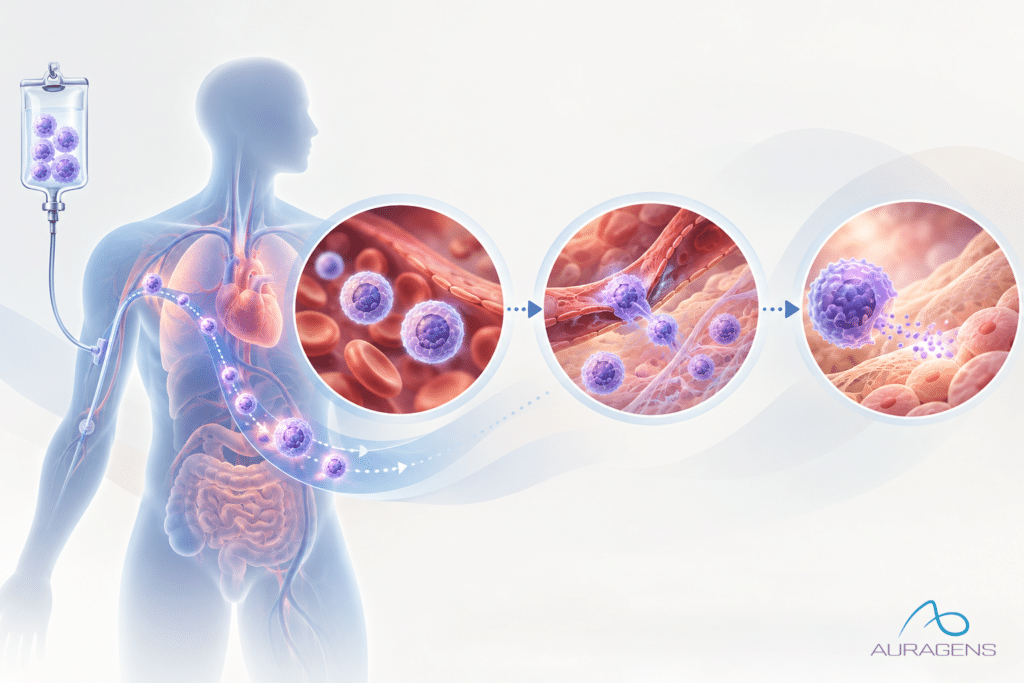
What happens after the cells enter the human body?
It sounds remarkably simple. It isn’t.
And answering it may help define the next generation of regenerative medicine.
Moving Beyond the Old Stem Cell Story
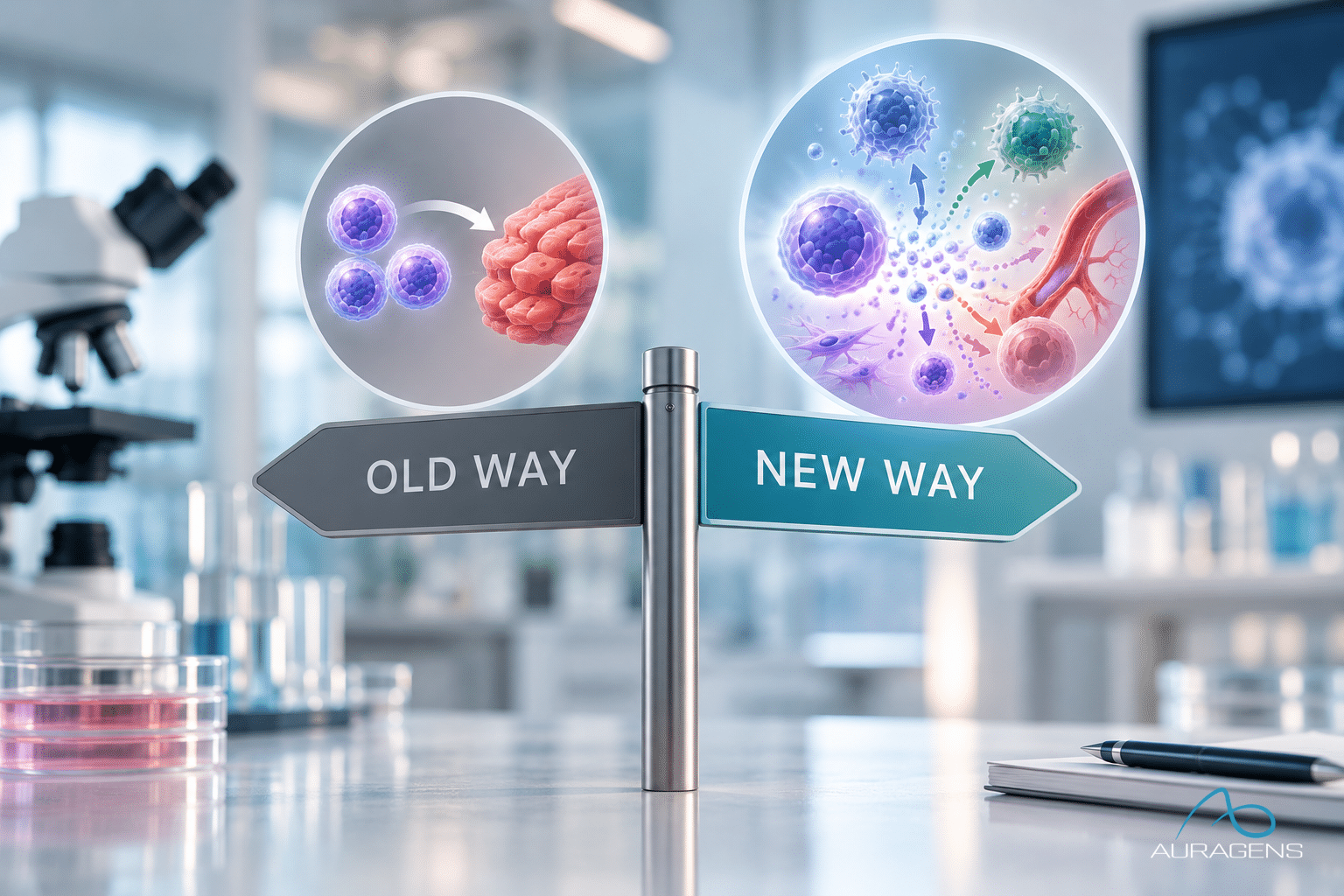
One of the most persistent misconceptions surrounding mesenchymal stromal cells, commonly called MSCs, is that they function primarily as microscopic replacement parts.
The simplified story goes something like this:
A patient has damaged tissue. Stem cells are introduced into the body. The cells travel to the injury, become new tissue and replace what was damaged.
It is an appealing explanation. It is also incomplete.
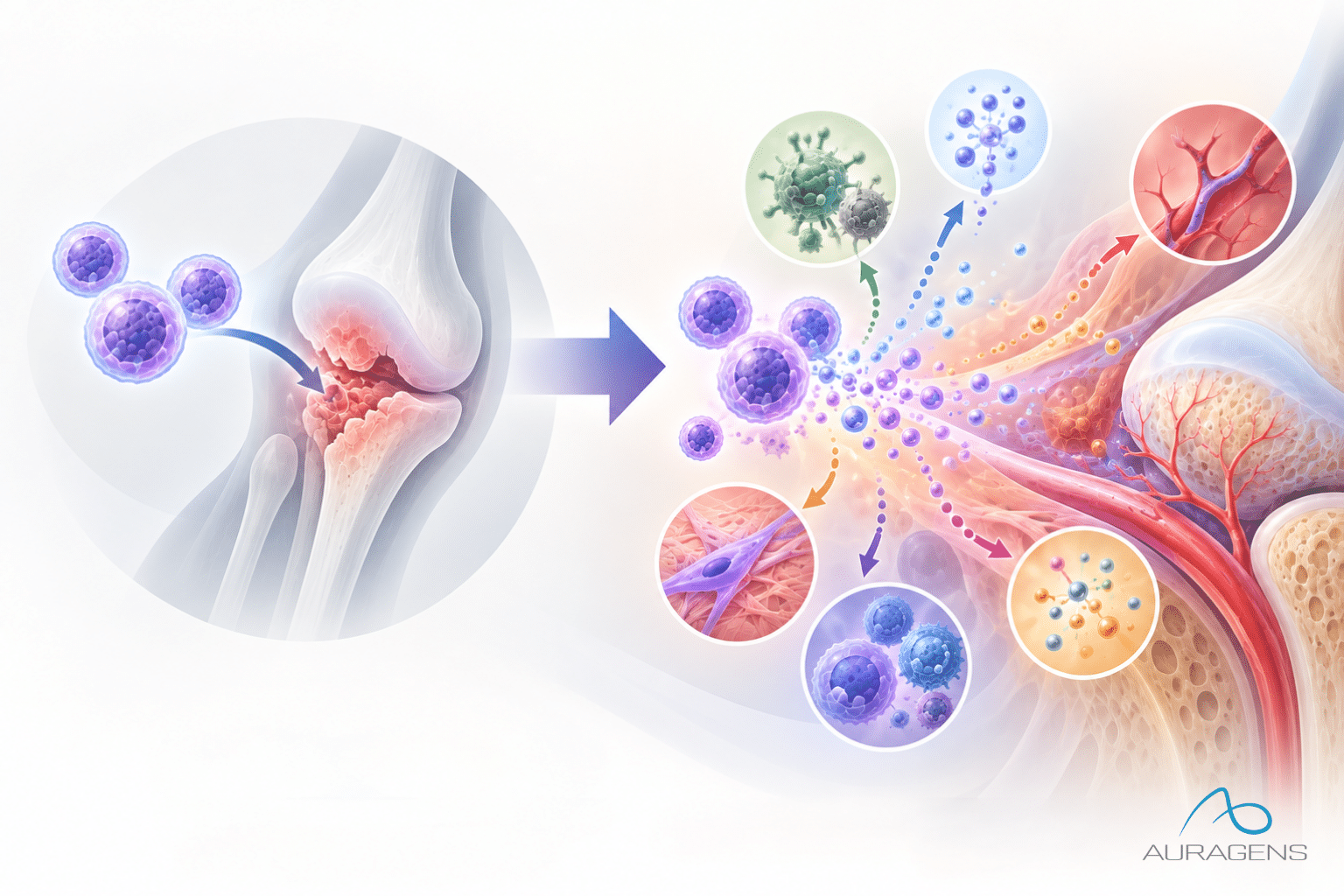
Modern MSC science is investigating something considerably more complex: interactions involving immune signaling, inflammatory pathways, secreted factors, extracellular vesicles, vascular and tissue environments, and communication between administered cells and the recipient’s own biology.
In other words, the emerging question isn’t simply:
Where do the cells go?
It is:
What biological conversation begins when they arrive?
ISCT Is Asking Exactly This Question
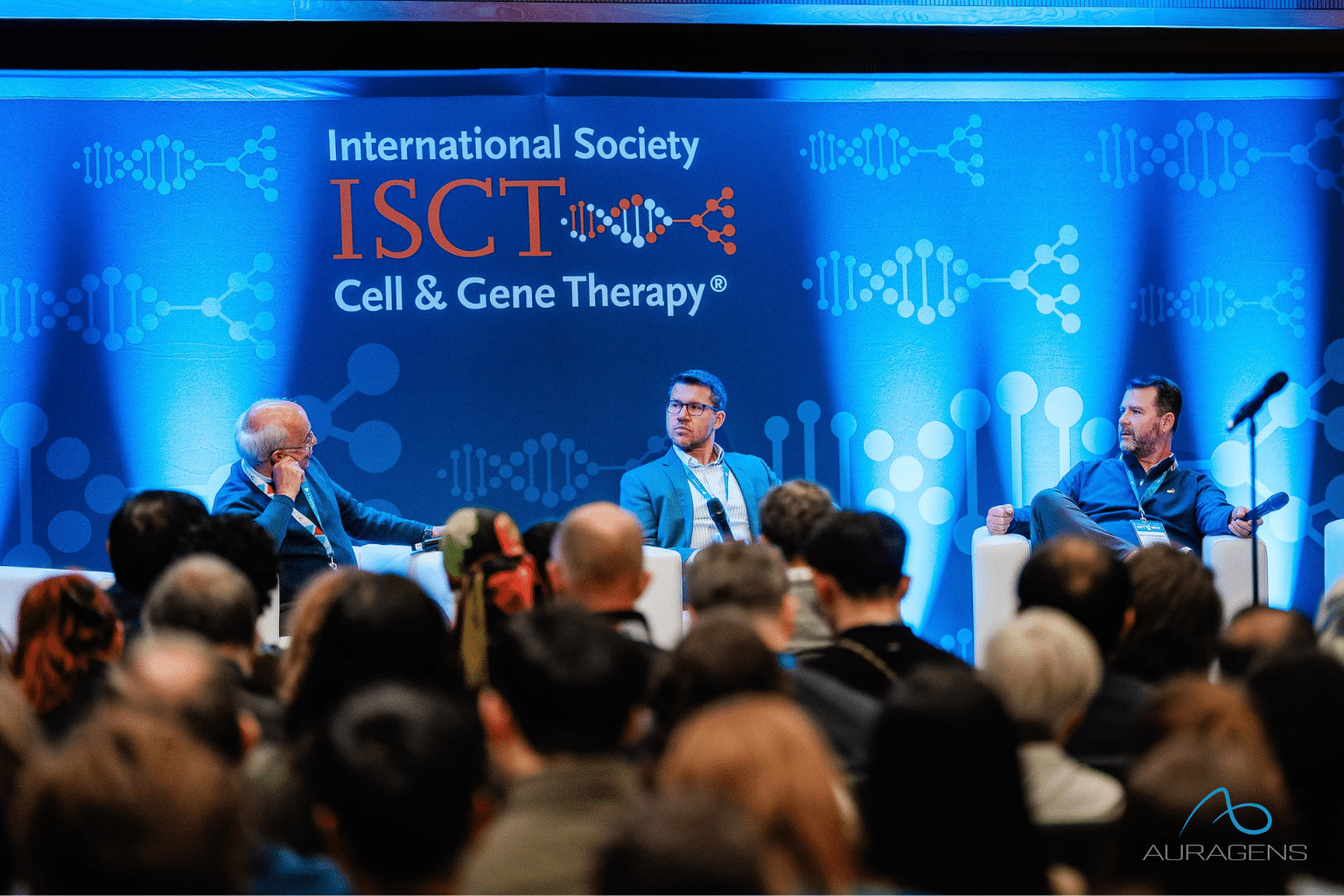
In May 2026, the Mesenchymal Stromal Cell Committee of the International Society for Cell & Gene Therapy (ISCT) convened a workshop during its Annual Meeting in Dublin titled Defining the Fate of Clinically Administered MSCs.
In September, the Committee published an update from that work.
Its premise is important.
Following administration, MSCs encounter a remarkably complex biological environment. ISCT specifically identifies blood components, complement and coagulation cascades, inflammatory mediators, tissue barriers, immune cells and disease-specific processes as factors that may influence MSC biological effects, distribution, persistence and clearance.
The Committee is now working toward shared experimental approaches capable of investigating these interactions more systematically.
That represents an important evolution in regenerative medicine. The cell cannot necessarily be understood independently from the environment into which it is introduced.
A living therapy meets a living patient.
And both sides of that interaction matter.
Source: International Society for Cell & Gene Therapy, MSC Committee, “After Dublin: Turning the MSC Fate Question Into a Shared Experimental Plan,” September 10, 2026.
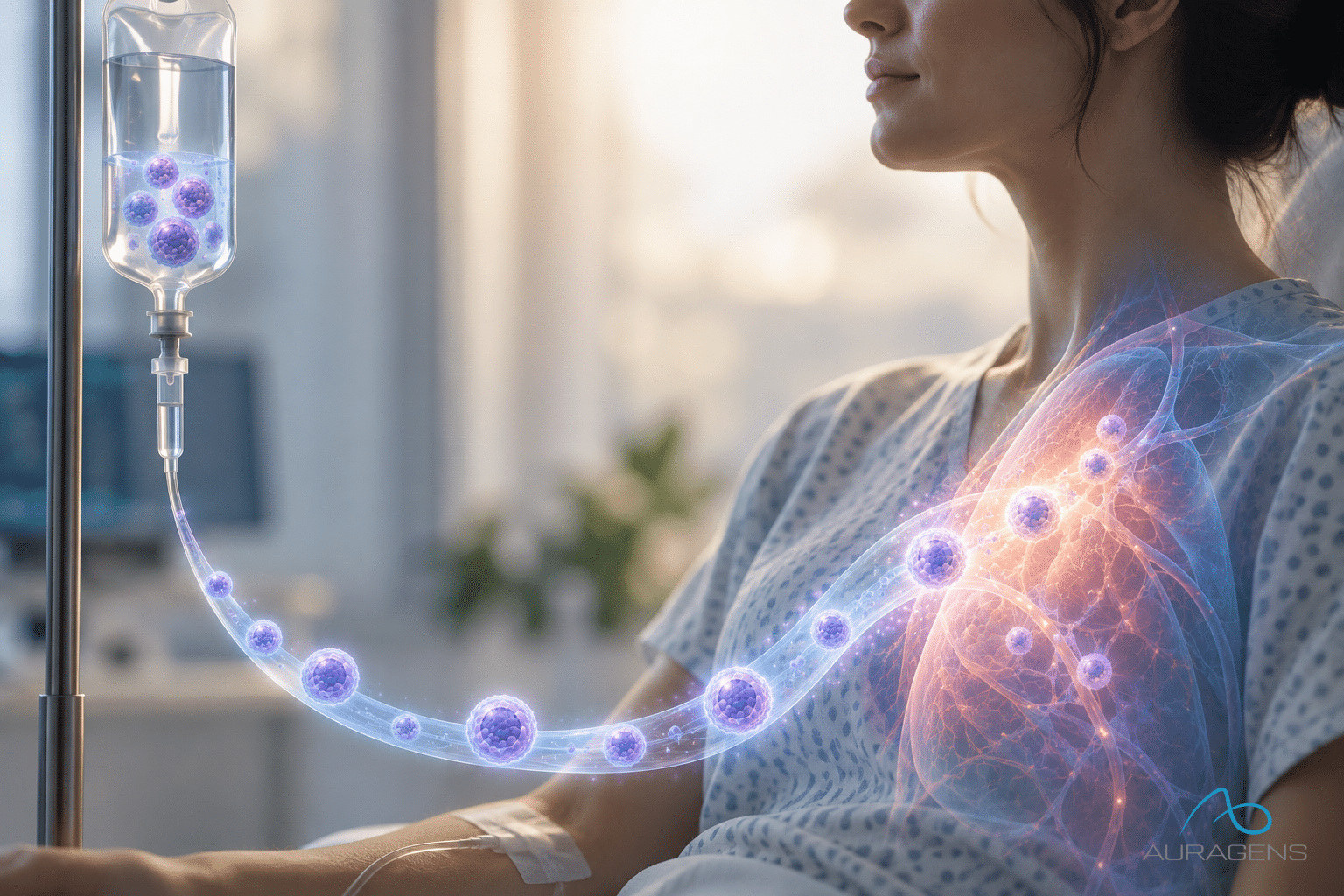
The Patient Is Part of the Biology
In May 2026, the Mesenchymal Stromal Cell Committee of the International Society for Cell & Gene Therapy (ISCT) convened a workshop during its Annual Meeting in Dublin titled Defining the Fate of Clinically Administered MSCs.
In September, the Committee published an update from that work.
Its premise is important.
Following administration, MSCs encounter a remarkably complex biological environment. ISCT specifically identifies blood components, complement and coagulation cascades, inflammatory mediators, tissue barriers, immune cells and disease-specific processes as factors that may influence MSC biological effects, distribution, persistence and clearance.
The Committee is now working toward shared experimental approaches capable of investigating these interactions more systematically.
That represents an important evolution in regenerative medicine.
The cell cannot necessarily be understood independently from the environment into which it is introduced.
A living therapy meets a living patient.
And both sides of that interaction matter.
Source: International Society for Cell & Gene Therapy, MSC Committee, “After Dublin: Turning the MSC Fate Question Into a Shared Experimental Plan,” September 10, 2026.
Route of Administration Is More Than Logistics
Consider something as seemingly straightforward as how a cellular product enters the body.
An intravenously administered MSC immediately encounters blood components, immune cells, complement and coagulation systems before interacting with the broader circulation.
A locally administered product encounters a very different biological environment.
Researchers continue investigating how these environments affect distribution, persistence, clearance and biological activity.
That means route of administration should not simply be viewed as a matter of convenience.
It is part of the scientific question.
And it reinforces an important principle:
Cellular therapy should not be reduced to a commodity procedure.
The Field Is Growing Up
This scientific discussion is occurring alongside a broader maturation of cellular medicine.
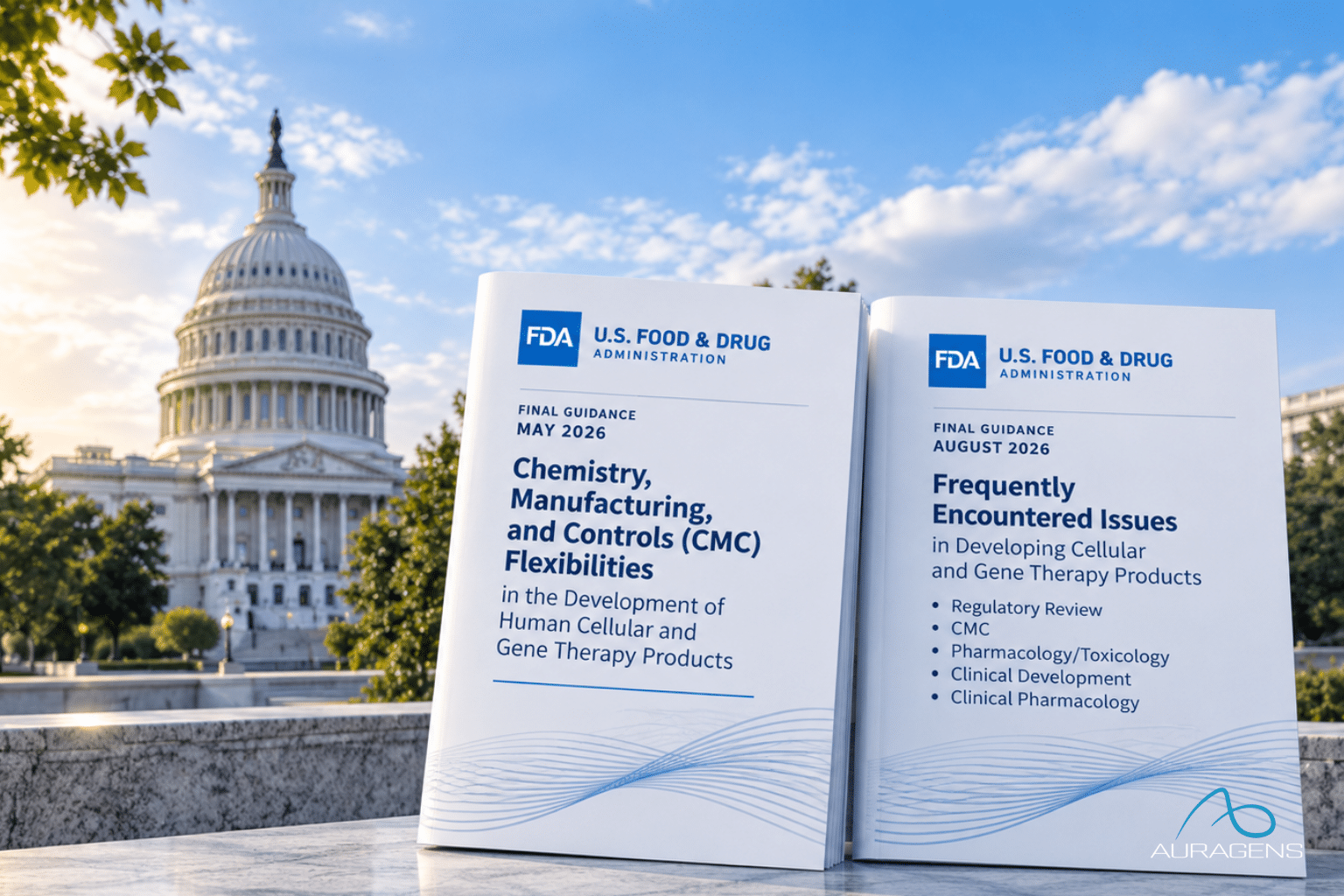
In May 2026, the U.S. Food and Drug Administration issued final guidance addressing Chemistry, Manufacturing, and Controls, or CMC, flexibilities in the development of human cellular and gene therapy products.
The document recognizes the unique characteristics of these therapies while maintaining the importance of appropriate manufacturing and product-quality controls during development.
Then, in August 2026, FDA issued additional final guidance addressing frequently encountered issues in developing cellular and gene therapy products across regulatory review, CMC, pharmacology/toxicology, clinical development and clinical pharmacology.
This follows FDA’s continuing work around potency assurance—an especially important concept in living medicines. FDA has described potency assurance not merely as a final laboratory test, but as a broader strategy involving manufacturing-process design, manufacturing controls, material controls, in-process testing and lot-release assays.
The implication is significant:
With cellular therapies, understanding the medicine requires understanding the process that created it.
Sources: U.S. Food and Drug Administration, “Chemistry, Manufacturing, and Controls Flexibilities for Developing Human Cellular and Gene Therapy Products for a Biologics License Application,” May 2026; “Frequently Asked Questions—Developin
And Now AABB Is Looking Across the Continuum
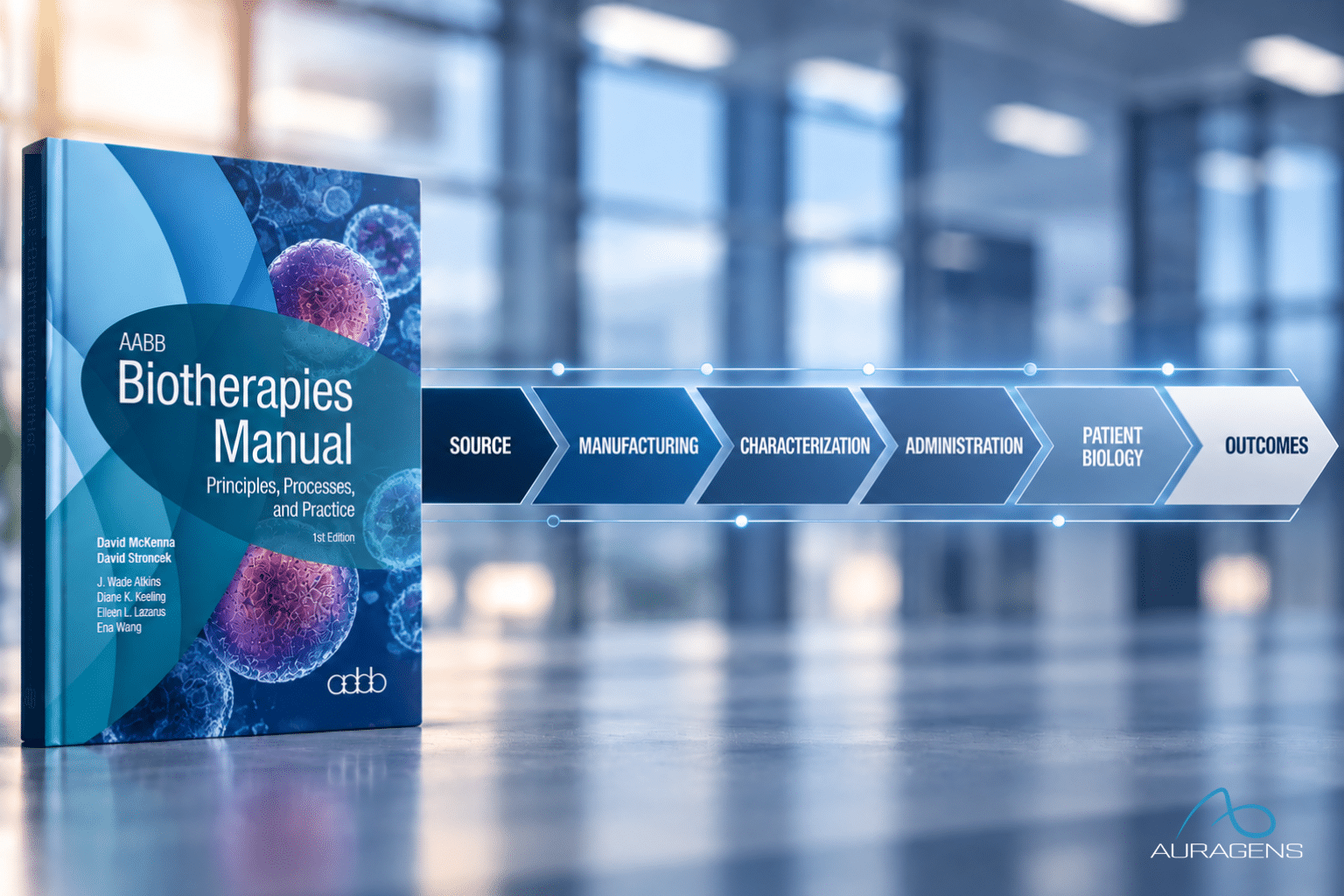
On September 18, 2026, AABB announced the publication of its first Biotherapies Manual: Principles, Processes, and Practice.
Its scope is noteworthy.
The 35-chapter reference addresses regulatory considerations, quality oversight, processing operations, facilities and equipment, cell collection, product development and manufacturing, testing and characterization, laboratory assays, product storage, issue and infusion.
Look carefully at that progression.
It doesn’t end when manufacturing is finished.
It follows the biological product toward the patient.
That is precisely where the larger conversation in regenerative medicine appears to be heading.
The field is beginning to connect the entire continuum:
SOURCE → MANUFACTURING → CHARACTERIZATION → ADMINISTRATION → PATIENT BIOLOGY → OUTCOMES
Every link matters.
And no link should be considered entirely in isolation.
Source: AABB, “AABB Publishes New Biotherapies Manual,” September 18, 2026.
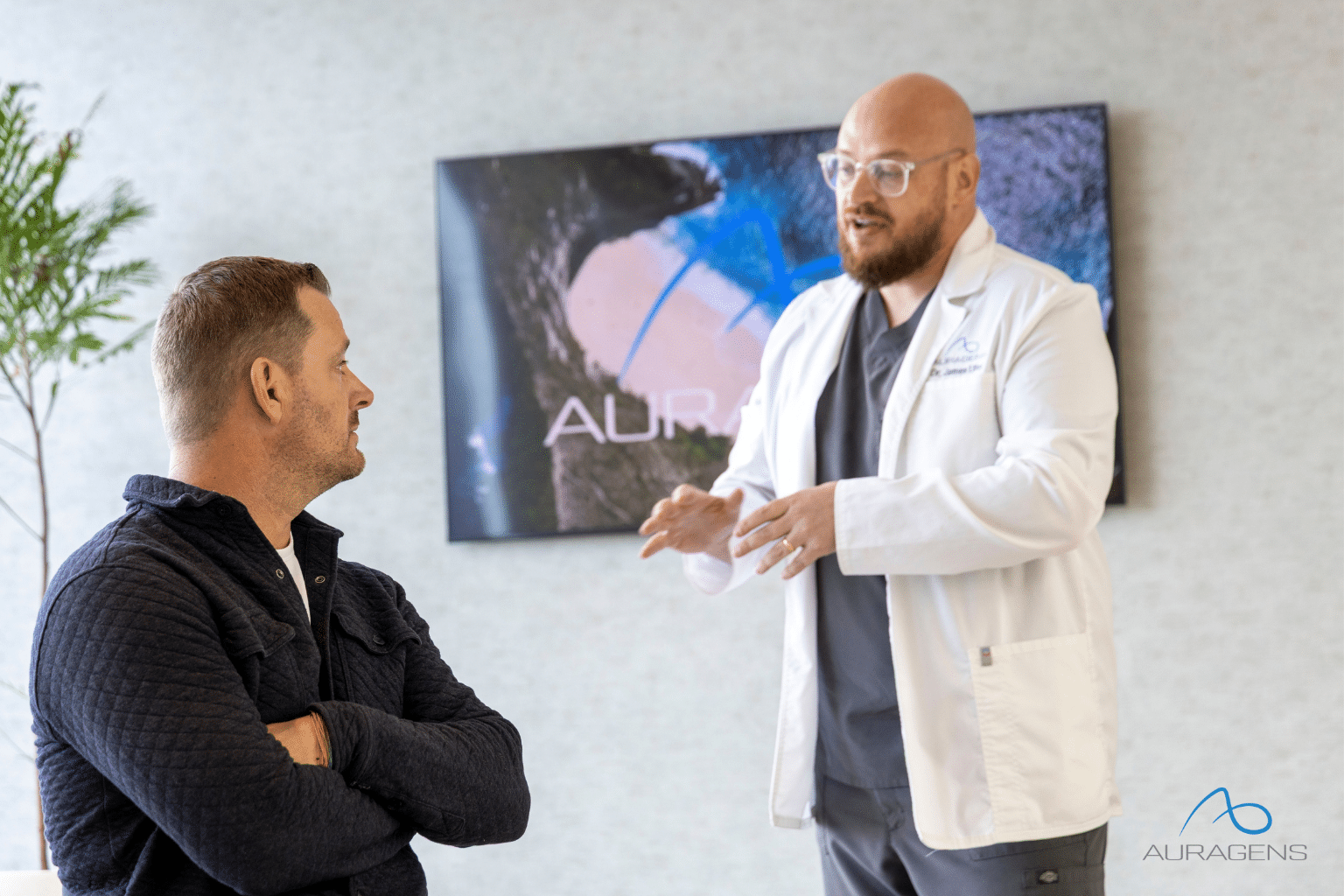
Where Auragens Fits
This philosophy has increasingly shaped the development of Auragens.
Our investment in laboratory infrastructure, chain of custody, third-party testing and AABB-accredited cellular therapy operations addresses one part of the continuum.
Our physicians, clinical evaluation and administration protocols address another.
Our research initiatives and increasing emphasis on longitudinal outcomes address what comes afterward.
But perhaps most importantly, we recognize that there are questions the field has not yet answered.
That acknowledgment matters.
Regenerative medicine has sometimes suffered from a tendency to speak with greater certainty than the science allows.
Treatments can be presented as though every mechanism is understood, every patient’s biology is interchangeable and every outcome can be predicted.
Biology is rarely that simple.
Auragens was created around a different philosophy:
Custodianship rather than consumerism.
Being a custodian of an emerging field requires more than believing in its potential.
It requires protecting its credibility.
That means measuring what can be measured.
Testing what can be tested.
Following patients beyond the procedure.
Publishing what can be learned.
Being transparent about limitations.
And continuing to ask difficult questions even when the answers are not yet known.